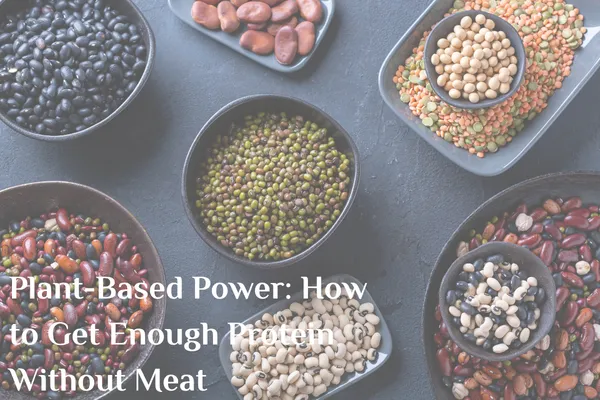
Plant-Based Power: How to Get Enough Protein Without Meat
"Where do you get your protein?" is probably the most predictable question anyone reducing meat intake gets asked. It's also one of the easiest to answer once you know where to look — plant-based protein is everywhere, it's just distributed differently than a chicken breast.
Here's how to make sure you're getting enough, without overthinking it.
You Have More Options Than You Think
Plant foods that bring meaningful protein to the table include:
Legumes: lentils, chickpeas, black beans, edamame
Soy foods: tofu, tempeh, edamame (again — it's doing double duty)
Whole grains: quinoa, farro, oats
Nuts and seeds: almonds, peanuts, hemp seeds, chia seeds, pumpkin seeds
Dairy and eggs, if you're vegetarian rather than fully plant-based
Protein-fortified products: some plant-based yogurts, milks, and pastas are fortified specifically to close the gap
The key difference from animal protein isn't availability — it's that most plant proteins are lower in protein density per gram of food and per calorie, which means portions and planning matter more.
The "Complete Protein" Question, Simplified
You may have heard that plant proteins are "incomplete" because they're missing one or more essential amino acids. This is true of most individual plant foods on their own — but it's also mostly irrelevant in practice. You don't need every meal to be a complete protein. As long as you're eating a variety of plant protein sources across the day (grains, legumes, nuts, seeds), your body pools amino acids from what you've eaten and covers its needs without you having to engineer each plate.
Practical Ways to Hit Your Protein Target
Anchor meals around a protein source first, then build the rest of the plate around it — the same principle that applies to any way of eating.
Double up when it's easy. Add lentils to a grain bowl that's already got quinoa. Add hemp seeds to oatmeal that's already got Greek yogurt. Small additions add up.
Don't skip tofu and tempeh because of texture concerns from one bad experience. Pressing tofu and marinating it, or pan-frying tempeh until it's crisp, changes the experience completely.
Spread protein across the day rather than backloading it into dinner — this matters even more on a plant-forward pattern, since it's easier to fall short earlier in the day.
Three Easy Plant-Protein Meal Ideas
1. Crispy Tofu Grain Bowl Pan-fried tofu, farro or quinoa, roasted vegetables, and a tahini-lemon dressing.
2. Loaded Lentil Soup Lentils, diced vegetables, and vegetable broth, simmered with cumin and paprika — pairs well with a side of whole-grain toast with nut butter for extra protein.
3. Chickpea & Edamame Salad Chickpeas, shelled edamame, cucumber, feta (if vegetarian, not vegan), and a lemon-olive oil dressing — a fast, no-cook option that holds up well for meal prep.
For Athletes Eating Plant-Forward
If you're training seriously and reducing meat, protein timing and total intake deserve a bit more attention than they might for a less active person. This doesn't mean supplements are required — it means planning matters. A plant-based protein powder can be a useful, convenient tool for closing gaps around training, but it's a supplement to a well-built plate, not a substitute for one.