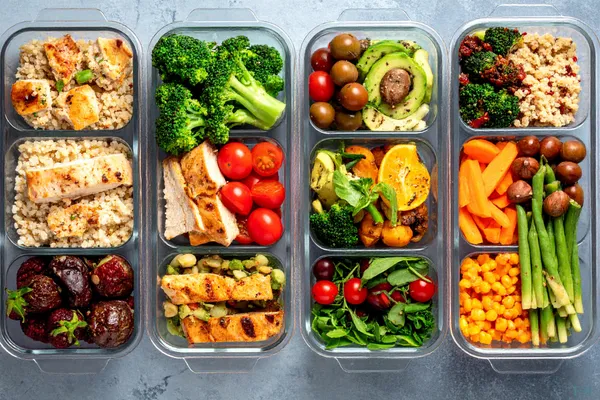
How to Meal Prep in Under 2 Hours for the Week
How to Meal Prep in Under 2 Hours for the Week
If the words "meal prep" conjure up images of a Sunday spent buried in Tupperware, three loads of dishes, and a kitchen that looks like a bomb went off — we get why you've written it off. Most meal prep content is built for people with four free hours and zero other responsibilities. That's not most of us.
Here's the truth: meal prep doesn't have to be a production. Done right, it's one focused block of time — under two hours — that hands you back your weeknights, keeps your blood sugar steadier, and makes "what's for dinner" stop being a daily crisis. You don't need a perfect system. You need a plan you'll actually repeat.
Why meal prep matters more than a "nice habit"
For women in perimenopause and menopause, long gaps between meals and inconsistent protein hit differently than they did in your 20s. Blood sugar swings harder, energy crashes faster, and by 5 p.m. your willpower is gone right when you need it most to make a good dinner decision. Decision fatigue is real, and it's usually the thing standing between you and eating the way you actually want to.
Meal prep isn't about discipline or "earning" your food. It's about removing decisions from the moments you have the least bandwidth to make them well. When protein and real food are already sitting in the fridge, ready to go, you stop white-knuckling your way through a busy Tuesday.
The 2-hour framework
The trick to fast meal prep isn't rushing — it's overlapping. You're not cooking five separate meals one after another; you're running two or three things at once and using the gaps.
0:00–0:10 — Plan and pull ingredients Pick 2–3 protein sources, 2 carb sources, and 3–4 vegetables. That's it. Variety comes from how you season and combine them, not from cooking ten different dishes.
0:10–0:30 — Get the oven and stovetop working
Preheat the oven and get one large tray of vegetables roasting (this runs unattended for 25–30 minutes).
Get a pot of rice, quinoa, or potatoes going on the stove or in a rice cooker.
If you're hard-boiling eggs, start them now too.
0:30–1:00 — Cook your protein While the oven and stovetop are doing their thing, sear or bake your main protein (chicken thighs, ground turkey, salmon, tofu). A sheet pan or large skillet lets you cook a week's worth at once instead of batch after batch.
1:00–1:20 — Second protein or sauce Use this window for a second protein (so you're not eating the same thing five days straight) or to throw together one or two sauces or dressings that make reheated food taste intentional instead of sad.
1:20–1:45 — Portion and pack Divide everything into containers. This is also when quick snacks and breakfasts come together — portion Greek yogurt, wash and cut fruit, or assemble overnight oats.
1:45–2:00 — Clean as you go, wrap up If you've been rinsing tools and wiping counters during the cook windows above (rather than saving it all for the end), this step is fast.
What to actually put in the containers
A meal prep plan lives or dies on whether it hits your protein target — this is the single biggest lever for staying full, keeping your energy steady, and protecting the muscle you're working for. Build each container around 30–40g of protein, not as an afterthought.
Proteins (pick 2–3): Chicken thighs or breast, ground turkey, salmon or another fatty fish, lean beef, tofu or tempeh, a dozen hard-boiled eggs, canned tuna or salmon for a no-cook option.
Carbs (pick 1–2): Rice, quinoa, roasted potatoes, farro, whole-grain pasta.
Vegetables (pick 3–4, roasted or raw): Broccoli, bell peppers, zucchini, carrots, cherry tomatoes, whatever's in season and on sale.
Sauces that make reheated food taste alive: A simple lemon-tahini dressing, a quick chimichurri, salsa, or a peanut-lime sauce. Ten minutes of whisking on prep day is the difference between "meal prep" and "meal prep you're excited to eat."
Fuel for runners and endurance athletes
If you're training, meal prep is one of the highest-leverage things you can do — it takes the guesswork out of fueling around runs, which is exactly when you're least likely to make a good decision on the fly.
Prep a batch of overnight oats or rice-based bowls for easy pre-run carbs.
Keep a stash of ready-to-grab recovery options — chocolate milk, Greek yogurt with fruit, or a prepped protein smoothie bag ready for the blender — so recovery happens in the window that matters, not whenever you get around to it.
Cook extra carbs (rice, potatoes) on prep day specifically to support harder training days later in the week.
Making it actually last the week
A few things that separate meal prep that survives Wednesday from meal prep that gets thrown out Thursday:
Store sauces and dressings separately from your prepped food, and add them right before eating — this keeps vegetables from getting soggy and protein from drying out. Undercook vegetables very slightly, since they'll finish cooking a bit more when reheated. Glass containers reheat more evenly than plastic and don't hold onto smells. And don't prep more than 4–5 days of any one thing; freeze a portion instead if you cooked in bulk, so nothing goes to waste and nothing gets boring enough that you abandon it.
You don't need a perfect system
You don't need color-coded containers, a spreadsheet, or a Pinterest-worthy fridge to make this work. Pick one protein, one carb, and a handful of vegetables this week. Get the timing down. Add variety next time. Something is better than nothing, and a rough two-hour prep you actually repeat beats an elaborate one you do once and quit.