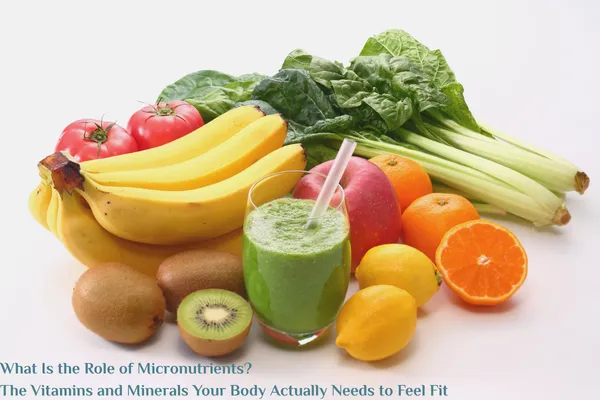
What Is the Role of Micronutrients? The Vitamins and Minerals Your Body Actually Needs to Feel Fit
What Is the Role of Micronutrients? The Vitamins and Minerals Your Body Actually Needs to Feel Fit
If you've ever stood in the supplement aisle wondering whether you actually need a multivitamin, magnesium, or "that one everyone's talking about," you're not alone. Most of the women we work with come to us exhausted — not just physically, but from years of conflicting advice. One influencer says cut carbs. Another says take this gummy. Meanwhile you're just trying to have enough energy to get through your workday, show up for a workout, and still make dinner.
Here's the piece that usually gets skipped in all that noise: you can be eating "enough" and still be running on empty if your body isn't getting the right micronutrients.
This isn't about chasing another supplement trend. It's about understanding what these nutrients actually do, why your needs shift in your 30s, 40s, and 50s, and how to build a foundation with real food first — the same fundamentals-over-hacks approach we use with every person we coach.
What Are Micronutrients, Exactly?
Micronutrients are the vitamins and minerals your body needs in small amounts to function — but "small amounts" doesn't mean small impact. Unlike macronutrients (protein, carbs, and fat, which give you energy), micronutrients don't provide calories. Instead, they're the behind-the-scenes crew making sure everything else works: turning food into usable energy, building and repairing muscle, keeping your bones strong, regulating your hormones, and supporting your immune system.
Think of macronutrients as the fuel and micronutrients as the spark plugs, wiring, and oil that keep the engine actually running. You can have a full tank and still stall out without them.
This matters even more once you hit your mid-30s and beyond. Hormonal shifts leading into perimenopause and menopause change how your body absorbs and uses key nutrients, which is part of why so many women in this stage start noticing new fatigue, stubborn weight changes, sleep issues, or workouts that suddenly feel harder. It's not in your head, and it's not a willpower problem — it's physiology.
The Role of Micronutrients in a Fit, Functioning Body
Every micronutrient plays a slightly different role, but broadly, they show up in four places that matter most for how you look, feel, and perform:
Energy production. B vitamins and iron help convert the food you eat into usable energy at a cellular level. This is why a deficiency often feels less like "I'm sick" and more like "I'm just always tired."
Muscle and bone health. Calcium, magnesium, vitamin D, and potassium all work together to help your muscles contract and recover properly and to keep your bones dense — something that becomes a bigger priority as estrogen naturally declines with age.
Hormone and mood regulation. Magnesium, vitamin D, and B vitamins are directly involved in regulating stress hormones, sleep, and mood — three things that are often disrupted during weight changes, high stress seasons, or perimenopause.
Recovery and immune function. Vitamin C, zinc, and iron support tissue repair and keep your immune system resilient, which matters if you're training consistently or juggling a demanding life (most of us are doing both).
Key Micronutrients to Know — and Where to Get Them
You don't need to memorize every vitamin and mineral out there. These are the ones that come up again and again for women in our community, and the ones most likely to be running low if you're tired, plateaued, or just not feeling like yourself.
Vitamin D
Often called the "sunshine vitamin," vitamin D supports bone density, immune function, mood regulation, and muscle strength. Low vitamin D is one of the most common deficiencies in women over 35, especially if you live somewhere with limited sun, spend most of the day indoors, or have more melanin in your skin (which reduces natural vitamin D production).
Signs you might be low: persistent fatigue, low mood, frequent illness, achy joints or bones.
Food sources: fatty fish (salmon, sardines, mackerel), egg yolks, fortified milk or plant milk, mushrooms exposed to UV light.
Tip: Vitamin D is fat-soluble, so pair it with a meal that includes some healthy fat for better absorption. Many women need a supplement to reach optimal levels — this is worth a conversation with your doctor and a simple blood test rather than guessing.
Magnesium
Magnesium is involved in over 300 processes in your body, including muscle relaxation, sleep quality, blood sugar regulation, and stress response. It's one of the most common nutrients we see running low, especially in women dealing with high stress, poor sleep, or intense training — all of which deplete magnesium faster.
Signs you might be low: muscle cramps or twitches, trouble falling or staying asleep, tension headaches, feeling "wired but tired."
Food sources: leafy greens, pumpkin seeds, almonds, black beans, dark chocolate, avocado.
Tip: If sleep is your main goal, food sources plus a wind-down routine will do more for you long-term than relying on a supplement alone — though magnesium glycinate is a well-tolerated option many women find helpful in the evening.
Iron
Iron carries oxygen through your blood to your muscles and brain. Low iron is especially common in women who are still menstruating, and it's one of the most overlooked reasons behind persistent fatigue, poor workout recovery, and feeling short of breath during exercise that used to feel easy.
Signs you might be low: fatigue that doesn't improve with sleep, pale skin, dizziness, feeling unusually breathless during workouts.
Food sources: lean red meat, poultry, lentils, spinach, fortified cereals. Pair plant-based iron sources with vitamin C (like citrus or bell peppers) to boost absorption.
Tip: Don't guess — a simple blood test (ferritin) can tell you where you actually stand before you start supplementing.
Calcium
Calcium is essential for bone strength, muscle contraction, and nerve function. Bone density naturally starts to decline earlier than most people realize, and the rate accelerates around menopause, which makes calcium (alongside vitamin D and strength training) a long-term priority, not just an "older woman" concern.
Food sources: dairy or fortified plant milk, yogurt, tofu, sardines with bones, leafy greens like kale and bok choy.
Tip: Your body can only absorb so much calcium at once, so spreading intake across the day (rather than one big dose) is more effective.
B Vitamins (B12 and Folate)
B vitamins, especially B12 and folate, are key players in energy metabolism, red blood cell production, and brain function. B12 is only found naturally in animal products, which makes it a common gap for anyone eating mostly plant-based.
Signs you might be low: fatigue, brain fog, irritability, tingling in hands or feet (B12 specifically).
Food sources: eggs, dairy, meat, fish, nutritional yeast, fortified plant milks.
Potassium
Potassium helps regulate fluid balance, muscle contractions, and healthy blood pressure. It works closely with sodium, which is why it matters so much for anyone training regularly and sweating it out.
Food sources: bananas, potatoes (with skin), white beans, coconut water, oranges.
Zinc and Vitamin C
Both support immune function and tissue repair, making them especially relevant if you're training consistently and asking your body to recover often.
Food sources for zinc: shellfish, beef, pumpkin seeds, chickpeas. Food sources for vitamin C: citrus fruit, bell peppers, strawberries, broccoli.
Micronutrients for Runners and Endurance Athletes
If you're logging miles, training for a race, or spending hours a week in endurance training, your micronutrient needs go up — and the gaps show up faster. A few nutrients deserve extra attention here:
Iron is non-negotiable for endurance athletes. Running in particular can lower iron stores over time (through sweat loss and a phenomenon called foot-strike hemolysis), so if your pace has dropped or your recovery feels off, iron is one of the first things worth checking.
Electrolytes (sodium, potassium, magnesium) become critical for anything over 60-90 minutes. Sweat isn't just water loss — it's mineral loss, and under-replacing electrolytes is a common reason behind mid-run fatigue, cramping, or that "hit a wall" feeling.
Calcium and vitamin D matter even more for runners because of the repetitive impact on bones. Chronic under-fueling combined with low vitamin D and calcium raises the risk of stress fractures, especially in women.
B vitamins support the increased energy demands of endurance training, so consistent intake matters more the more you train.
The bottom line for endurance athletes: more training volume means more nutrient turnover, not less need for it. This is a place where "eat less to lose weight" advice can actually work against your performance and your long-term health.
Food First, Supplements Second
We're not anti-supplement — sometimes they're genuinely necessary, especially for vitamin D, iron, or B12 when a blood test confirms a real gap. But supplements are meant to fill in around a solid food foundation, not replace one.
A few fundamentals we coach on repeat:
Eat a variety of colorful vegetables and fruit most days — the color variation reflects a variety of micronutrients, not just fiber.
Include a protein source at each meal, since many of the foods richest in iron, zinc, and B12 are also protein sources.
Don't fear fat. Vitamins A, D, E, and K all need dietary fat to be absorbed properly.
Get your levels checked before assuming you need a supplement. A simple blood panel takes the guesswork out and tells you exactly what your body needs.
You Don't Need to Overhaul Everything at Once
If this list feels like a lot, take a breath. You don't need to fix every gap this week, and you definitely don't need a cabinet full of supplements to get there. Pick one thing — maybe it's adding a handful of pumpkin seeds to your lunch, or finally booking that blood panel you've been putting off — and start there. Something is always better than nothing, and consistency with the fundamentals will take you further than any perfect plan you never start.
This is exactly the kind of thing we walk through with our coaching clients — not a generic checklist, but a plan built around your actual life, your training, and what your body needs right now. If you're tired of guessing and ready for real support, we'd love to help you figure out what your body actually needs.