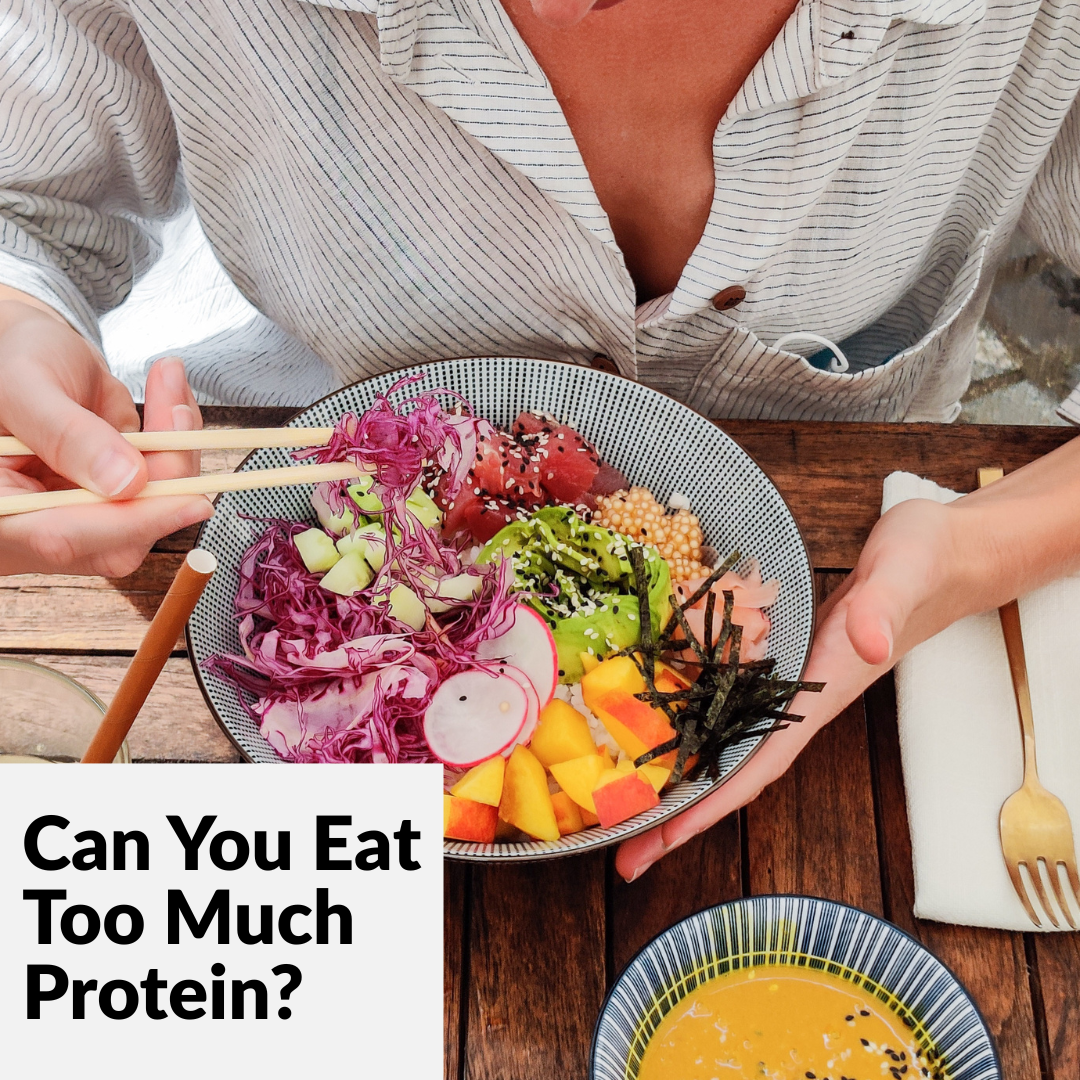
For healthy individuals, extra protein isn’t harmful—it just gets used for energy. The key is balance: hit your protein target while keeping carbs and fats in check for your goals.
If you’ve ever tracked your food, started strength training, or followed any kind of structured nutrition plan, you’ve probably heard the warnings: “Be careful—you don’t want to eat too much protein!” But is that actually a thing?
Let’s break it down in a way that makes sense for real life, real goals, and real bodies.
What Actually Happens When You Eat Extra Protein?
Protein isn’t stored in the same way carbs and fats are. Instead:
-
Your body uses protein to repair tissue, build muscle, produce hormones, and support your immune system.
-
Once those needs are met, extra protein can be converted to glucose (energy) through a process called gluconeogenesis.
-
Your body then uses that energy just like it would use carbs.
This means that for healthy individuals, excess protein isn’t going to “damage your kidneys” (a common misconception) or automatically turn into fat.
Can You Overdo It?
You can eat more protein than you need, but the “problem” isn’t danger—it’s imbalance.
Here’s where too much protein becomes counterproductive:
1. It Crowds Out Carbs and Fats
If you’re overshooting protein, something else usually drops.
And carbs and fats are essential for:
-
Training performance
-
Hormone function
-
Recovery
-
Energy levels
-
Brain function
You don’t want to feel flat on your runs, sluggish in your lifts, or cranky in everyday life because you’re underfueled.
2. It Can Stall Body Composition Goals
If your protein is pushing you over your calories, or you’re unintentionally under-eating carbs, you might:
-
Lose strength
-
Plateau in fat loss
-
Struggle to build muscle
-
Feel hungrier (ironically — carbs are often more satisfying for energy needs)
3. It Doesn’t Increase Muscle Growth Beyond a Certain Point
There’s a limit to how much protein your body can use for muscle repair at once. More isn’t always better — it’s more like enough is enough, and the rest is just energy.
How Much Protein Do You Actually Need?
For most active women, somewhere around 0.7–1g of protein per pound of goal body weight is a solid range.
Lifters, runners, and women training multiple times a week sit toward the higher end.
But once you hit your daily target, eating above that doesn’t magically do anything extra.
Balance > Extremes
Eating protein is important.
Eating enough protein is game-changing.
Eating way above what you need? It’s not harmful—it just steals space on your plate from other nutrients that matter.
It’s like having all the gear for a workout… but forgetting to actually show up for the workout.
Protein alone won’t build muscle or fuel performance. The full picture matters.
For healthy individuals, extra protein isn’t dangerous—it just becomes energy. But if you want optimal strength, performance, recovery, and body composition, the goal isn’t “as much protein as possible.”
It’s balanced nutrition and hitting the right mix of:
-
Protein for repair
-
Carbs for energy
-
Fats for hormone health
Dial in all three, and your body will respond in the best way possible.
Leave a Comment
You must be logged in to post a comment.

0 Comments