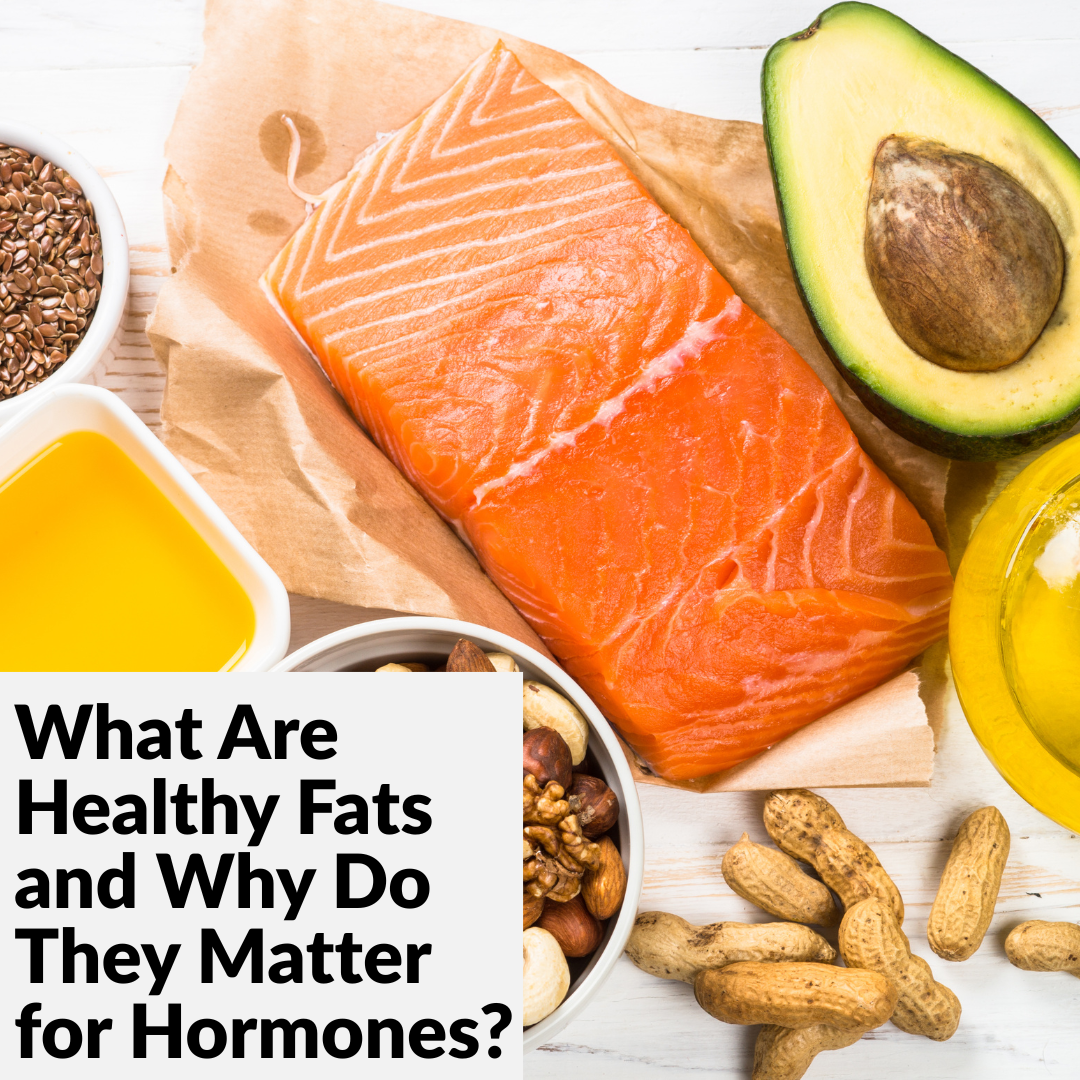
Focus on omega-3s, olive oil, avocado, nuts, seeds, and fatty fish. These fats help balance hormones, reduce inflammation, and support brain function.
Now let’s break down why fat matters, especially if you train hard, feel stressed, or want better energy, mood, and recovery.
Hormones need fat
Hormones aren’t just floating around magically doing their job. Many of them are made from fat and cholesterol, including:
-
Estrogen
-
Progesterone
-
Testosterone
-
Cortisol
If fat intake is consistently too low, your body doesn’t have the raw materials it needs to produce and regulate these hormones properly. That can show up as:
-
Irregular or missing periods
-
Low energy
-
Poor recovery
-
Mood swings
-
Stubborn fat loss
-
Constant hunger or cravings
This is especially common in active women who undereat or avoid fats because they’ve been told they’re “bad.” They are not.
What actually counts as “healthy fats”?
Healthy fats are fats that support inflammation balance, cell health, brain function, and hormone production.
Here are the big ones to prioritize:
1. Omega-3 fats (the MVP for hormones)
Omega-3s are anti-inflammatory and play a huge role in hormone signaling and brain health.
Benefits:
-
Support estrogen balance
-
Improve insulin sensitivity
-
Reduce inflammation from training
-
Support mood and cognitive function
Best sources:
-
Fatty fish (salmon, sardines, mackerel, trout)
-
Chia seeds
-
Flaxseed
-
Walnuts
-
High-quality fish oil (if intake is low)
Most people are deficient here, especially if fish isn’t eaten regularly.
2. Olive oil (liquid gold)
Extra virgin olive oil is rich in monounsaturated fats and polyphenols.
Benefits:
-
Supports heart and metabolic health
-
Helps regulate blood sugar
-
Supports hormone signaling
-
Anti-inflammatory
How to use it:
-
Salad dressings
-
Drizzled over veggies
-
Low to medium heat cooking
3. Avocado
Avocados provide monounsaturated fats plus fiber and micronutrients.
Benefits:
-
Helps stabilize blood sugar
-
Supports satiety (you stay full longer)
-
Supports reproductive hormone health
They’re a great add-on for meals when someone feels “never satisfied” after eating.
4. Nuts and seeds
Nuts and seeds bring fats, fiber, and minerals together.
Benefits:
-
Support hormone production
-
Help with digestion and gut health
-
Provide zinc, magnesium, and selenium (all important for hormones)
Good options:
-
Almonds
-
Walnuts
-
Pumpkin seeds
-
Sunflower seeds
-
Chia and flax
Portion matters here — they’re nutrient-dense, not something to avoid.
5. Fatty fish
Worth calling out again because it checks multiple boxes.
Benefits:
-
High-quality protein
-
Omega-3s
-
Supports recovery, brain function, and hormone balance
Aim for 2–3 servings per week if possible.
How healthy fats support hormones (in real life)
1. They help regulate blood sugar
Stable blood sugar = more stable hormones. Including fats with meals slows digestion and prevents energy crashes.
2. They reduce chronic inflammation
High inflammation can disrupt hormone signaling and recovery. Omega-3s are especially helpful for active people.
3. They support brain health and mood
Your brain is largely fat. Low fat intake is often linked with poor focus, low mood, and irritability.
4. They help you feel satisfied
Meals with zero fat often lead to constant snacking and cravings later in the day.
Common fat myths that still need to die
“Fat makes you fat.”
Eating excess calories consistently does. Fat is just one macronutrient.
“Low fat is better for hormones.”
Chronically low fat intake often does the opposite.
“I should only eat fat if I’m keto.”
Nope. Fat matters no matter how you structure carbs.
How much fat do you actually need?
There’s no perfect number, but most active women do best when fat intake is adequate and consistent, not eliminated.
As a general baseline:
-
Include a source of fat at most meals
-
Don’t avoid it to “save calories”
-
Prioritize quality over ultra-processed sources
If periods are irregular, recovery feels off, or hunger is constant, fat intake is one of the first things to check.
Healthy fats aren’t optional — they’re essential. If you want balanced hormones, better energy, improved recovery, and a healthier relationship with food, start here:
-
Omega-3s
-
Olive oil
-
Avocado
-
Nuts and seeds
-
Fatty fish
Eat them consistently, without fear, and let your body do what it’s designed to do.
Leave a Comment
You must be logged in to post a comment.

0 Comments